

Recently, the popular aesthetic injection ingredient PDRN has made its way into the cosmetics field in a non-invasive form and is visibly gaining traction. PDRN offers comprehensive benefits and, having just entered the beauty market, is highly worthy of being a key claim for new products. Effective claims require scientific support, so let me explain the skincare mechanism of PDRN to help everyone more easily communicate product selling points that consumers can readily understand.
1. What is PDRN?
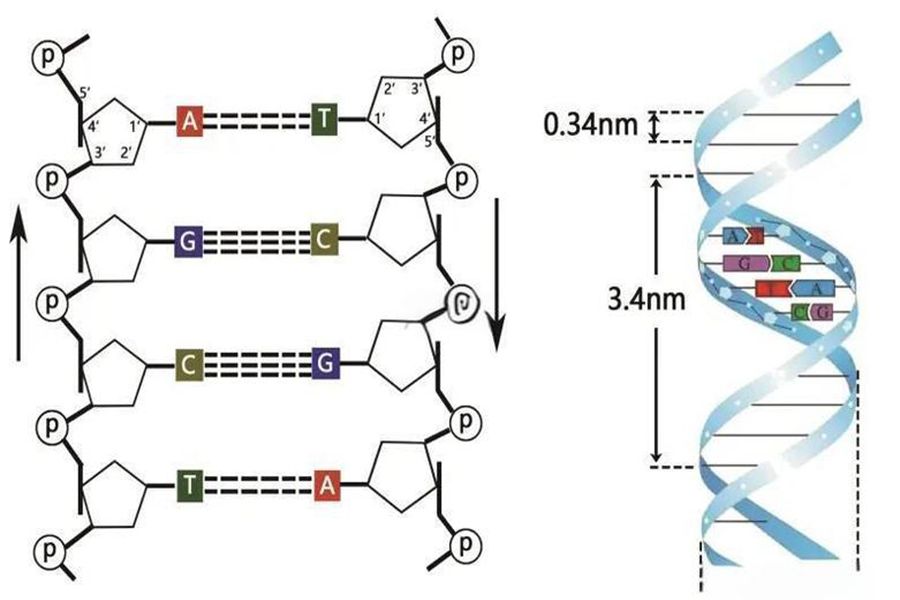
PDRN, short for PolyDeoxyRiboNucleotide, is a DNA fragment with a chain length of 80–2200 base pairs and a molecular weight ranging from 50 to 1500 kDa. **It has a double-helix structure.
2. Source of PDRN:
PDRN was initially primarily derived from animals, mainly extracted from salmon sperm cells. However, production was limited by salmon breeding seasons, leading to the exploration of alternative sources: from starfish/sea cucumber sperm, to marine plants (red algae), and even terrestrial plants (ginseng, rose, rice, etc.).
Those familiar with such ingredients may have also heard of PN (Polynucleotides). In fact, it has the same structure as PDRN, but with a molecular weight greater than 1500 kDa. Currently, in the beauty industry, the terms PDRN and PN are often used interchangeably. Earlier this year, relevant literature suggested using 1500 kDa as the dividing line between PDRN and PN.
3. The skincare benefits of PDRN can be summarized as follows:
– Stimulates cell proliferation and migration, promoting skin regeneration
– Reduces inflammation
– Remodels the dermis (Type I/III collagen, elastin, fibrinogen, etc.)
– Promotes cellular DNA synthesis and protein production
– Inhibits melanin production and transport, brightening the skin
4. But how exactly does PDRN work?
PDRN primarily works through two pathways:
1. Salvage Pathway
2. Activation of Adenosine A2A Receptors
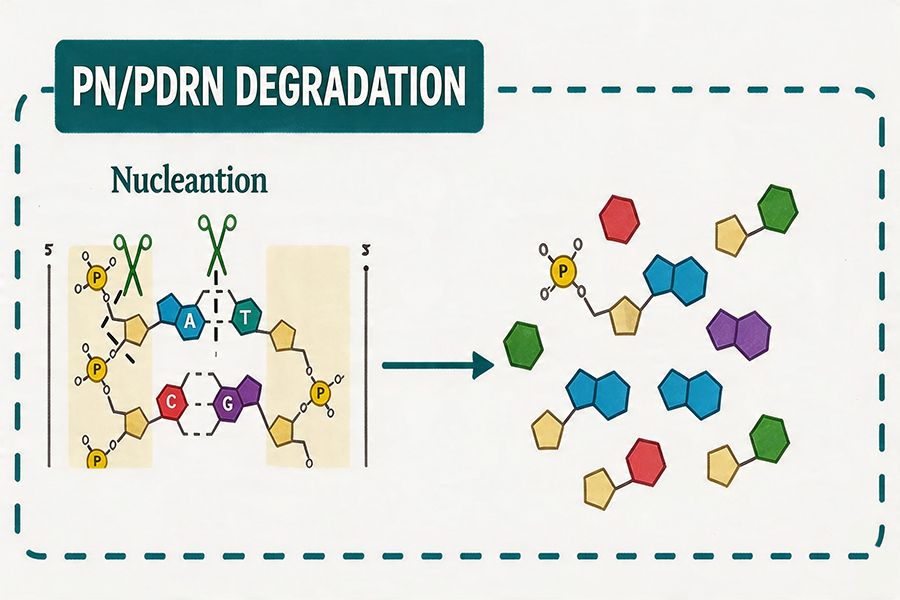
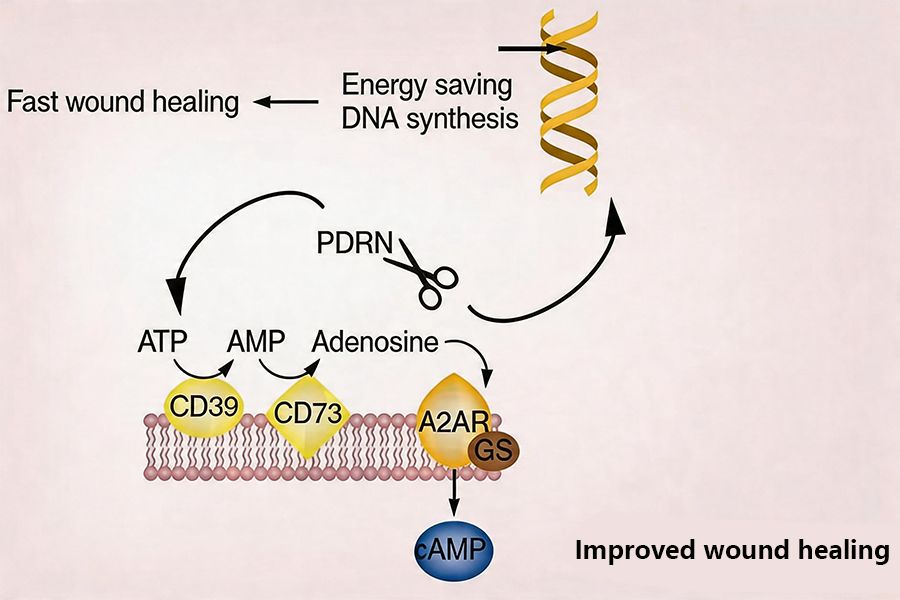
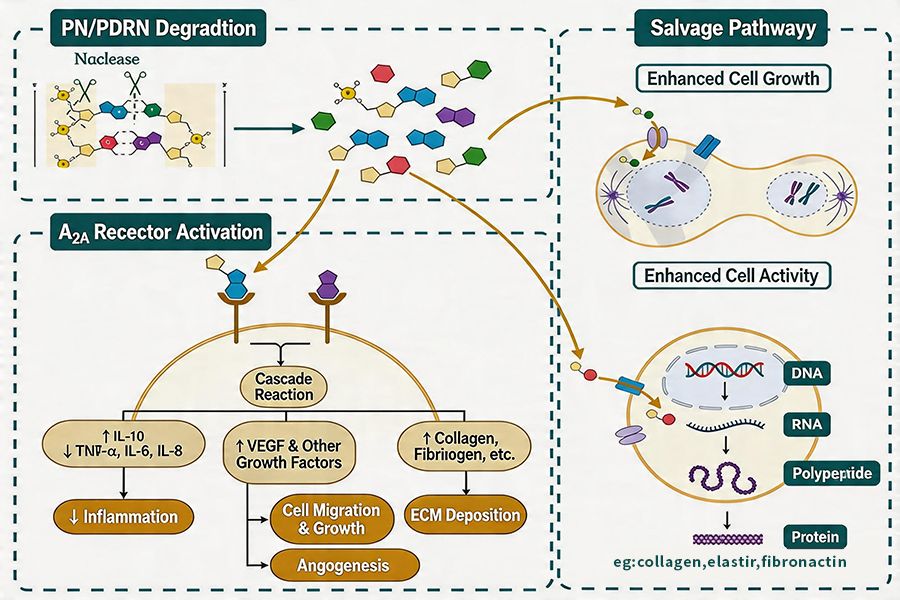
The key point to understand is that, regardless of the pathway, PDRN itself does not enter the cell. The critical first step for PDRN to take effect is being broken down by nucleases into nucleotides and nucleosides. These nucleotides then exert their effects through the two pathways mentioned above.
We know that genetic materials like DNA and RNA are crucial for cell function, proliferation, and metabolism. However, factors such as UV radiation, free radicals, and environmental pollutants can damage the DNA and RNA of skin cells, thereby affecting normal cell metabolism and function.
The products of PDRN degradation or enzymatic breakdown (deoxyribonucleotides and nucleosides) enter the cell through membrane proteins, providing raw materials for the synthesis of new DNA. This promotes cell growth and enhances protein synthesis efficiency.
Activation of A2A Receptors
Adenosine A2A receptors are an important part of the endogenous “immune suppression loop” and are present in most cells involved in wound healing.
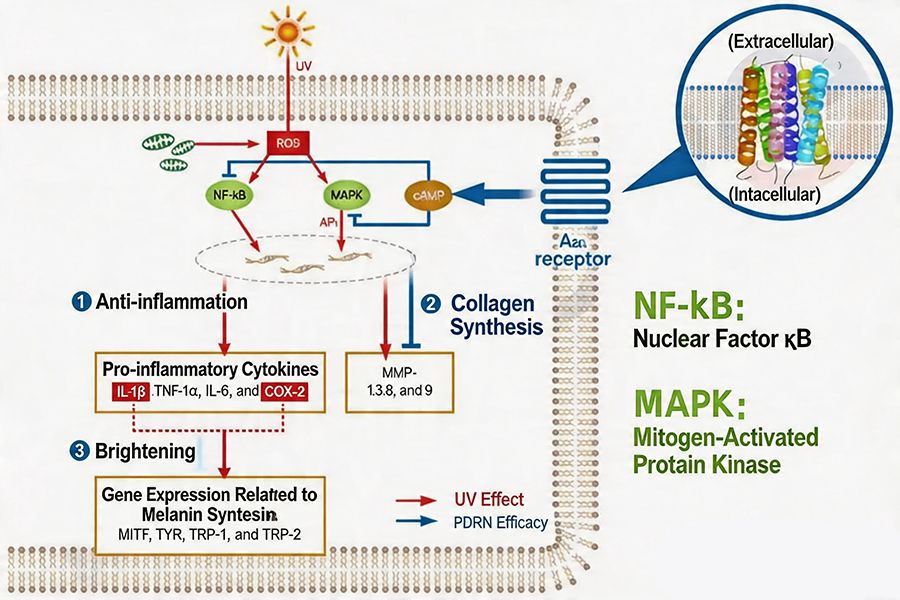
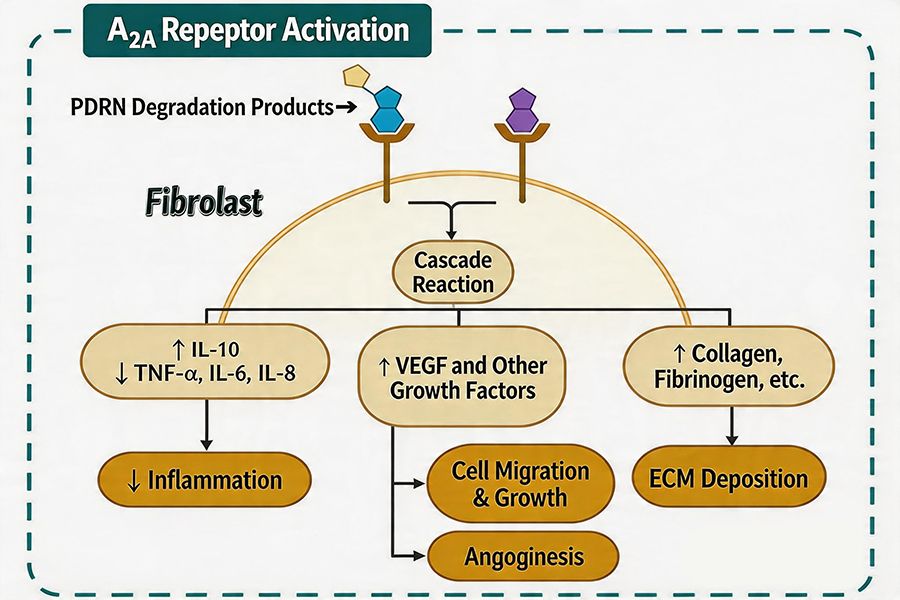
After PDRN is degraded, some of its products can bind to adenosine A2A receptors, activating various cellular pathways as shown in the diagram:
After activation of adenosine A2A, it primarily regulates the NF-kB and MAPK pathways. Among these, it is relatively well-established that by blocking the NF-kB pathway, the release of multiple pro-inflammatory cytokines can be suppressed, while stimulating the release of anti-inflammatory cytokines.
As for the MAPK pathway, whether it promotes or inhibits inflammation remains unclear. After reviewing numerous related studies, it appears that the mechanisms involved are highly complex, and there is no definitive conclusion yet—it remains somewhat of a black box.
Although the exact mechanism of the MAPK pathway is still unclear, the skin benefits resulting from PDRN’s activation of the adenosine A2A pathway are relatively well-established, including:
1. Promotes skin cell proliferation and migration, aiding skin repair
Nucleotides stimulate the secretion of VEGF (vascular endothelial growth factor) and other growth factors, thereby promoting angiogenesis, cell migration, and growth, ultimately supporting skin repair.
2. Inhibits inflammatory cytokines
The cascade reaction triggered by the activation of the adenosine A2A pathway leads to a decrease in pro-inflammatory cytokines (such as TNF-α, IL-1β, IL-6, IL-8, COX-2, etc.) and an increase in anti-inflammatory factors (e.g., IL-10), thereby reducing the overall inflammatory state.
3. Repairs/optimizes the ECM
Three favorable conditions promote the synthesis of collagen (Type I/III/XVII), elastin, and fibrinogen in the extracellular matrix (ECM):
① As inflammation decreases, blood support increases, and cell growth improves, skin cells such as fibroblasts operate in an optimal environment, enhancing vitality and protein synthesis efficiency.
② The salvage pathway improves the efficiency of DNA and RNA synthesis. Together, these effects enhance the mechanical structural support of the ECM, restoring a youthful state to the dermis.
③ The cascade reaction also inhibits the expression of MMP-1 and collagenase, protecting dermal proteins from degradation.
4. Inhibits melanin production and melanosome transfer
Some studies indicate that PDRN can reduce the expression of microphthalmia-associated transcription factor (MITF) and tyrosinase-related protein-1/2 (TRP-1/2), thereby inhibiting melanin production.
On the other hand, melanosome transfer is regulated by PAR-2, which is upregulated by pro-inflammatory factors (such as TNF-α). When PDRN reduces TNF-α, it can inhibit inflammation-induced melanin transfer and deposition.