

Introduction:
In the cosmetic packaging industry, whether you are using glass bottles, PET containers, acrylic jars, or squeeze tubes, the dispensing mechanisms—such as caps or pump heads—play a critical role. To guarantee product safety and prevent formula leakage, the integrity of the seal between the closure (cap) and the container (bottle) is paramount.
This guide breaks down the core principles of bottle cap and neck sealing, providing valuable technical insights for sourcing and procurement professionals in the premium cosmetic supply chain.
PART 1: Foundational Knowledge of Packaging Seals
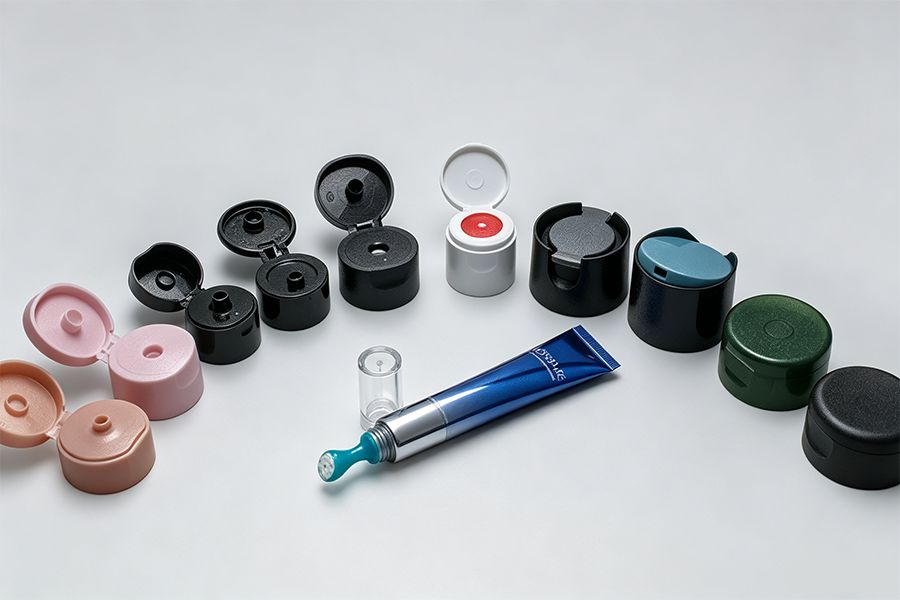
1. The Cap and the Bottle Neck (Finish)
The cap and the bottle neck achieve proper sealing through specific connection mechanics, which must meet the following criteria:
- Secure Fastening: The connection must firmly anchor the cap to the bottle neck while allowing for intentional opening and closing.
- Even Pressure Distribution: It must provide sufficient and uniformly distributed pressure across the sealing contact surface. This pressure needs to remain constant from the moment of packaging until the container is opened by the end-user.
- Linerless Closures: For cap structures that do not use a sealing liner (e.g., plug seals or land seals), the contact area on the bottle neck must be perfectly smooth, uniform, and allow for flawless surface-to-surface contact.
- User Experience: The opening and resealing process must be simple, quick, and reliably leak-proof.
2. The Cap and the Sealing Liner (Gasket/Wad)
To ensure the sealing liner presses accurately against the neck’s contact surface, the liner must be precisely positioned and perfectly sized to fit within the inner architecture of the cap.
3. The Sealing Liner and the Bottle Neck
The engineering of how the liner meets the bottle neck requires precise calculation. Designers must determine the contact method, surface area, sealing width, and the thickness of the liner. This ensures the material provides adequate elasticity (to fill gaps) while maintaining the necessary rigidity.
PART 2: Core Sealing Principles
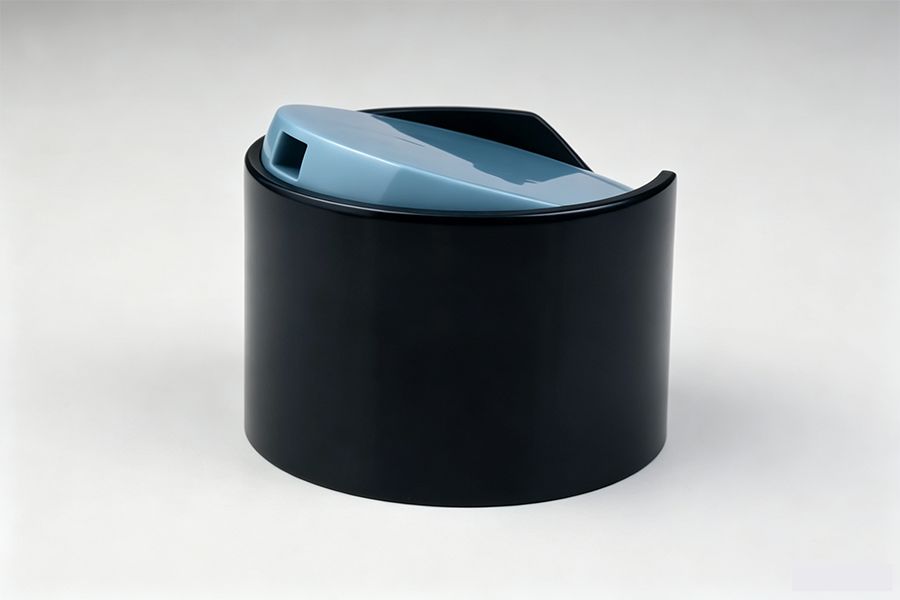
The fundamental principle of a seal is to establish a flawless physical barrier at the bottle opening. This barrier prevents the leakage of internal contents (whether liquid or gas) and blocks the ingress of external elements (such as air, moisture, or environmental contaminants).
To achieve this, the sealing liner must be elastic enough to compress and fill any microscopic irregularities on the sealing surface. Simultaneously, it must be rigid enough to prevent being squeezed out of the surface gap under application pressure. Both elasticity and rigidity must be sustained over the product’s entire shelf life.
The Role of Pressure in Sealing
To secure a robust seal, the liner pressed against the bottle neck must maintain adequate compression pressure throughout the product’s lifespan. Generally, within a reasonable range, higher pressure yields a better seal.
However, excessive pressure can lead to catastrophic failures, such as cap cracking, cap deformation, shattered glass necks, warped plastic containers, or ruptured liners—all of which result in immediate seal failure. Therefore, optimal sealing relies on ensuring excellent surface contact rather than simply maximizing force.
Surface Area vs. Torque
The wider the sealing area on the bottle neck, the more the load applied by the cap is distributed. Consequently, for a given application torque, a wider area results in lower actual sealing pressure. Therefore, to achieve an optimal seal without damaging the liner or container, the width of the sealing surface should be kept as narrow as practically possible. In other words, to achieve maximum effective sealing pressure with a lower application torque, a narrower sealing ring is highly recommended.
PART 3: Standard Sealing Mechanisms
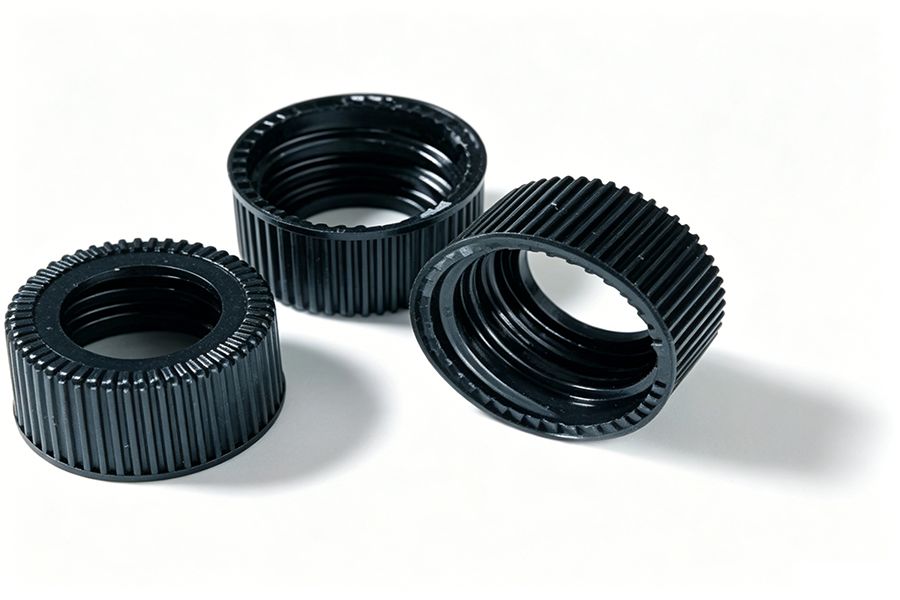
1. Thread Engagement
Thread engagement refers to the number of full turns the cap’s thread makes from its starting point down to the point where the sealing liner firmly contacts the bottle neck. To ensure the liner is pressed evenly across the entire circumference of the bottle neck, at least one full turn (360 degrees) of thread engagement is required.
Greater thread engagement improves cap alignment and enhances the holding power of the applied torque. The pitch (the distance between threads) determines the slope or angle of the thread. A larger pitch means a steeper angle, allowing the cap to be twisted on or off faster, but it also requires a taller cap height to achieve the necessary number of thread turns. Therefore, an optimal thread pitch is crucial—an excessively large pitch can negatively impact the aesthetic design and increase manufacturing costs.
2. Application Torque
Once the structural design of the cap and neck is finalized, achieving a reliable seal comes down to applying the correct amount of downward pressure. For screw caps, this metric is known as Application Torque.
While application torque is critical, it cannot be easily measured directly on the production line while the capping machine’s chuck is engaged. Therefore, manufacturers use torque testers to measure the Removal Torque (the rotational force required to unscrew the cap) as a reliable proxy. Required torque is directly proportional to the cap’s diameter. It is vital to remember that a reliable seal depends on the liner’s elasticity and the smoothness of the contact surface—not purely on the tightness or the mechanical force applied.
PART 4: Alternative Cap Sealing Methods
Beyond standard screw caps, the cosmetics and packaging industries utilize several other sealing techniques:
1. Neck Edge Sealing (Rim Seal)
In this method, the primary sealing surface is the outer, upper edge of the bottle neck. A natural or synthetic rubber gasket is placed inside the edge of a lug cap (twist-off cap). This gasket aligns seamlessly with the tapered outer rim of the bottle neck. The seal is primarily created by the pressure exerted downward by the cap onto the neck’s protruding flange.
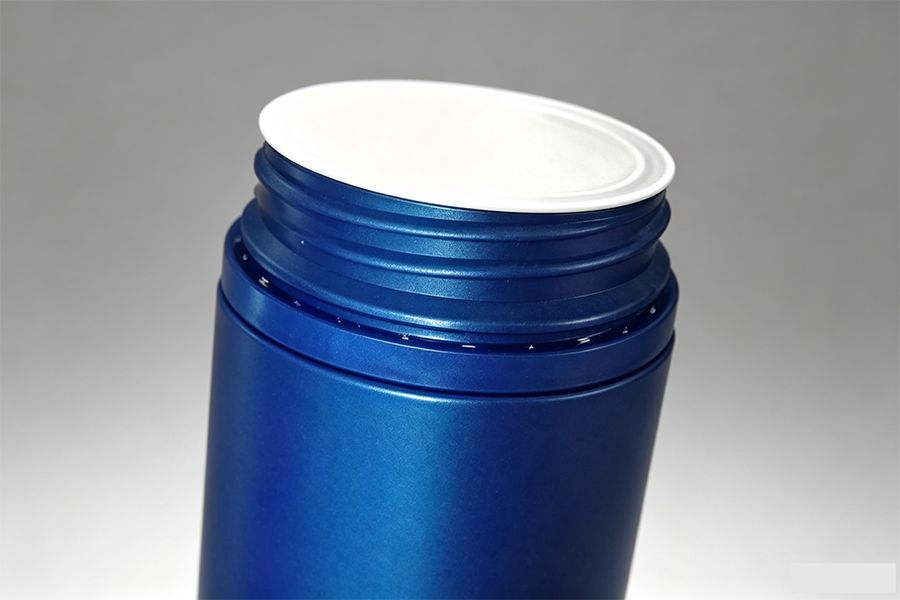
2. Combined Sealing
A combined seal provides a dual barrier, engaging both the top horizontal surface of the bottle neck and the outer edge (rim). This method offers superior protection but involves significantly higher technical and manufacturing requirements.
3. Plug Sealing (Stoppers)
Plug sealing relies on the friction generated when a stopper—made from various materials—is press-fitted into the inner rim of the bottle neck.

- Materials: Common options include natural cork, plastic plugs, and glass stoppers.
- Characteristics: Natural cork is historically ideal because it is elastic, compressible, impermeable to air and water, and has low thermal conductivity. For modern alternatives, hollow plastic plugs (with or without structural ribs) and skirted plastic plugs that adapt to gradual changes in the neck’s inner diameter provide highly effective and consistent plug seals.
4. Snap-On / Snap-Fit Sealing
This method uses flexible plastic caps, typically made from LDPE (Low-Density Polyethylene) or PC (Polycarbonate), which simply “snap” over the bottle neck. As downward pressure is applied, the flexible cap bites into a locking ring molded into the bottle neck. This mechanism turns the entire surface of the ring edge into a tight sealing face. The greater the elasticity of the plastic, the tighter it grips the locking ring, resulting in a more secure, leak-proof seal.